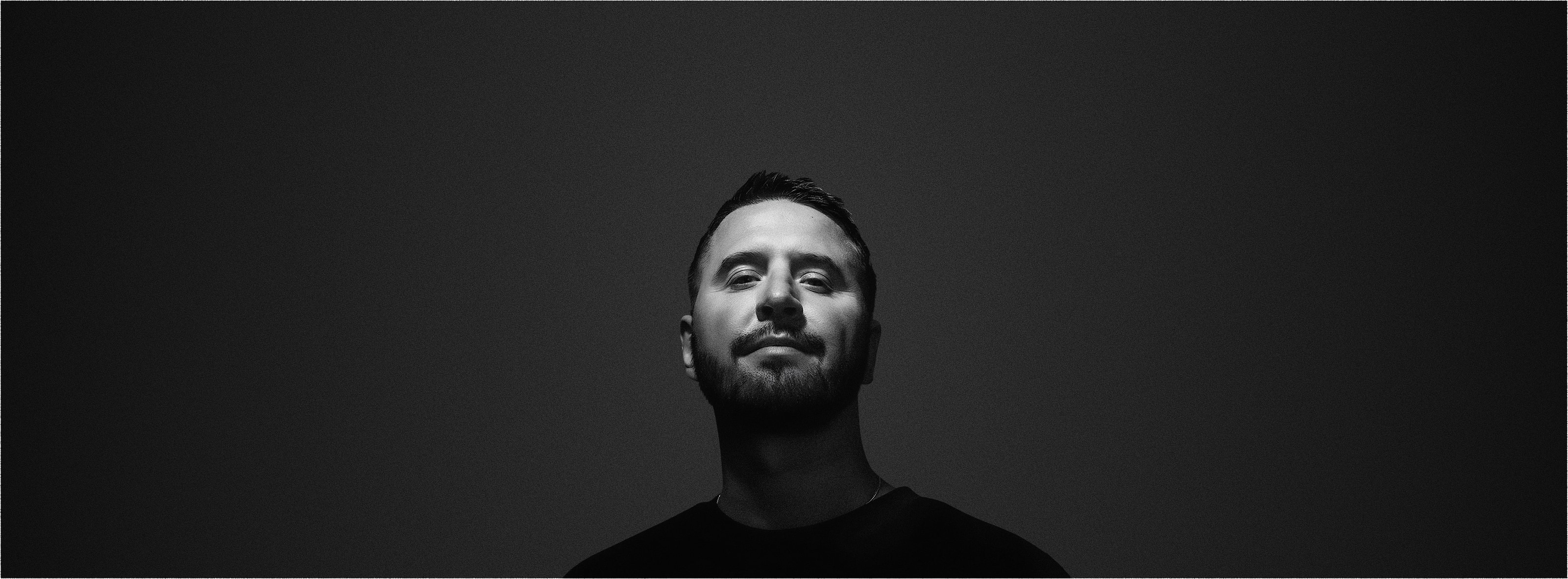
I'm Simon.
Designer based in
Stockholm, Sweden.
Started in agencies. Moved upstream. Now I partner with scale-up teams around the world where strategy, systems, and craft have to work at the same time.
What I believe
Design is mostly decision-making. The visuals come after. What to build, what to cut, what to push back on when the brief is wrong. That's the real work, and where I spend most of my time.
Most decisions touch three others. A flow connects to a system, a system connects to a brand, a brand connects to how the support team answers tickets on Monday. The designers I trust think in those connections, not in screens. That's what makes work last past the launch.
After seventeen years of this, the pattern I keep seeing is teams optimising for what's easy to measure. Then they wonder why the product feels flat. The reasons people actually convert and stay aren't always in the dashboard. Trust. Momentum. The sense that something was built with care. As work keeps moving to logic and AI, holding that line matters more, not less.
How I got here
I almost didn't become a designer. I always liked people, and I'd told myself I wasn't the kind who'd spend his life in front of a screen.
What I didn't know yet was that design is people — behaviour, collaboration, the small frictions between what someone wants and what they get. I found front-end first, taught myself everything I could before I'd finished high school, and started at one of Sweden's top agencies at eighteen. International brands from the start.
The first decade was agency work. Hundreds of e-commerce builds, every client convinced theirs was the special case, every project teaching me the same thing: the problem on the brief was rarely the actual problem.
Somewhere in there I started asking why we were building things, for whom, and what for. That's when design stopped being a craft I was good at and started being something I had a perspective on.
Systembolaget taught me how to align competing priorities across a large organisation and turn that into shipped product decisions. Electrolux taught me that showing a better version is far more convincing than arguing for it. Those two lessons are still load-bearing.
The move upstream came naturally. Many organisations don't really value design — they think business decisions belong at the top, not in the room where the product is being made. I disagreed, loudly and often, and ended up in rooms earlier each year.
Off the clock
Outside design, most of my time goes to art, music and architecture. I'm drawn to all three for the same reason — they're disciplines where the details actually matter, where someone clearly cared, and where you can feel it without anyone having to explain why.
I also spend a lot of time pulling people together offline. Dinners, gatherings, small things and bigger things when I get the chance. The longer I work in front of a screen, the more I notice the moments that stick with me happen in rooms, not only in feeds.
Most weekends include at least one of those four things. Some include all of them.
Areas of expertise
- 01 Vision & strategy
- 02 End-to-end product thinking
- 03 Design systems
- 04 Team force multiplier
- 05 Connecting design to outcomes
- 06 Working upstream with ambiguity