CASE STUDY
Driving executive buy-in in a 5-day Lean UX sprint
Electrolux is one of the world's largest appliance companies. 60 million household products a year, 120 markets, and an organisation that's been around for over a century. I was given five days to prove a new way of working.
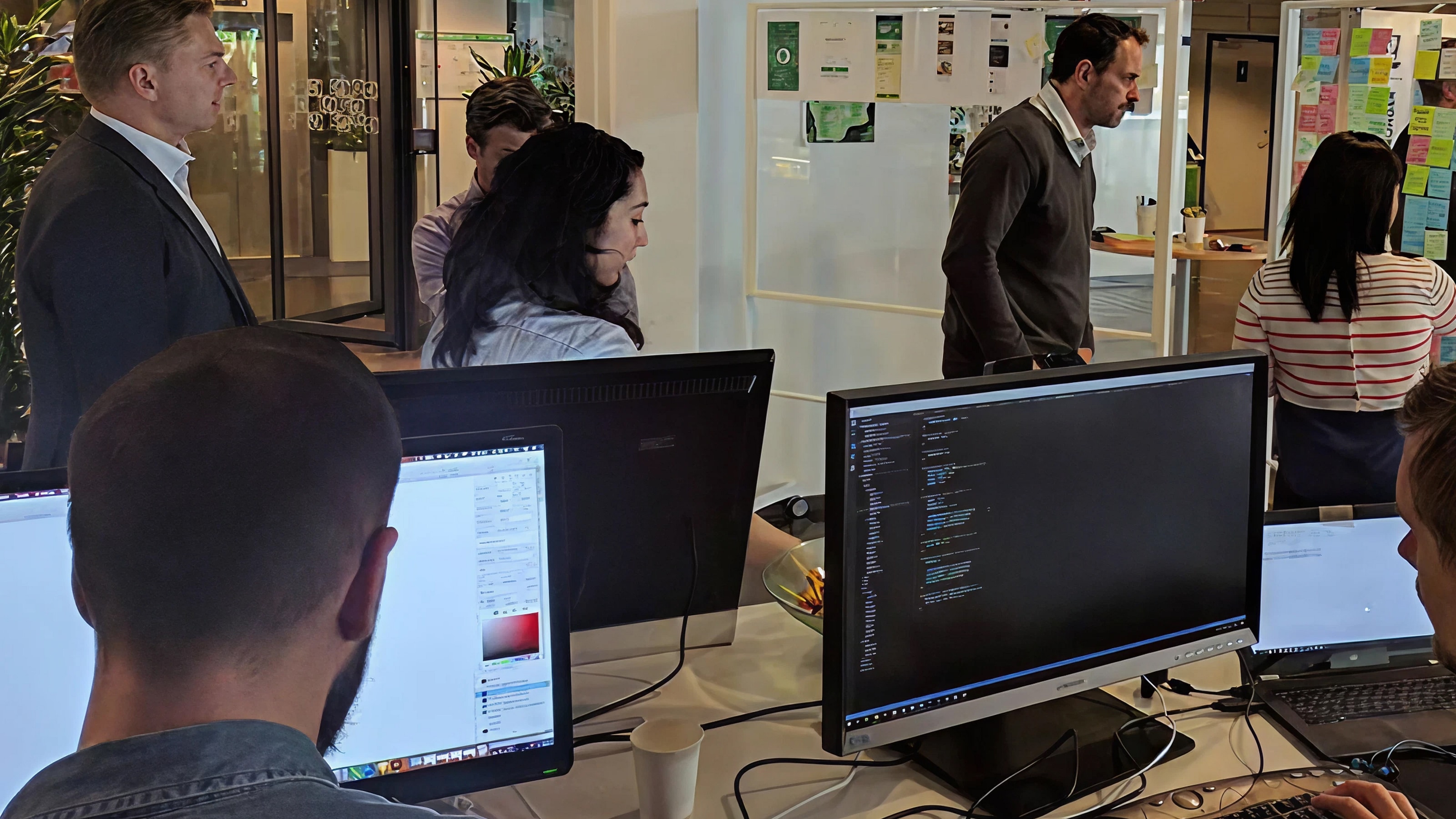
Electrolux wanted hands-on proof of what an agile, user-centric approach could deliver for future IT projects. The brief: develop a functioning lunch app in five days using the Build-Measure-Learn loop from Lean UX, and turn the experience itself into internal evidence for a new way of working.
The canteen at HQ had two compounding problems. Employees hit lunch simultaneously, producing long queues and unpredictable demand. Others skipped lunch entirely because back-to-back meetings left no slack for a queue. Both behaviours fed the same outcome: significant daily food waste. The hypothesis: a lightweight app could reshape flow, match preparation to actual demand, and improve both the employee experience and the kitchen's economics.
Project goals
Ship v1
A shippable lunch app delivered in one working week, tested with real users on-site.
Internal buy-in
Demonstrate an agile, user-centric way of working to leadership and create a mandate to scale it.
Transferable practices
Methods, artefacts, and cadence that future IT projects could replicate without starting from scratch.
Framing the problem
Booth in the canteen
We set up a research station next to the queue during lunch service. This gave us roughly 40 unscripted conversations over two days — more than a week of booked interviews would have produced, and with the problem in its natural environment. The booth became our standing validation loop for the rest of the week.
Journey mapping with kitchen staff
The visible queue was only half the story. Mapping the kitchen's parallel process exposed the real pressure point: prep decisions made at 09:00 couldn't adapt to demand at 12:30. That insight moved the app's centre of gravity from ordering to scheduling.
Competitive scan of lunch apps
We reviewed existing office-canteen and restaurant-ordering products to catalogue the expected flow, then deliberately cut everything that didn't serve the waste-reduction goal. The scan was about knowing what to leave out, not what to copy.
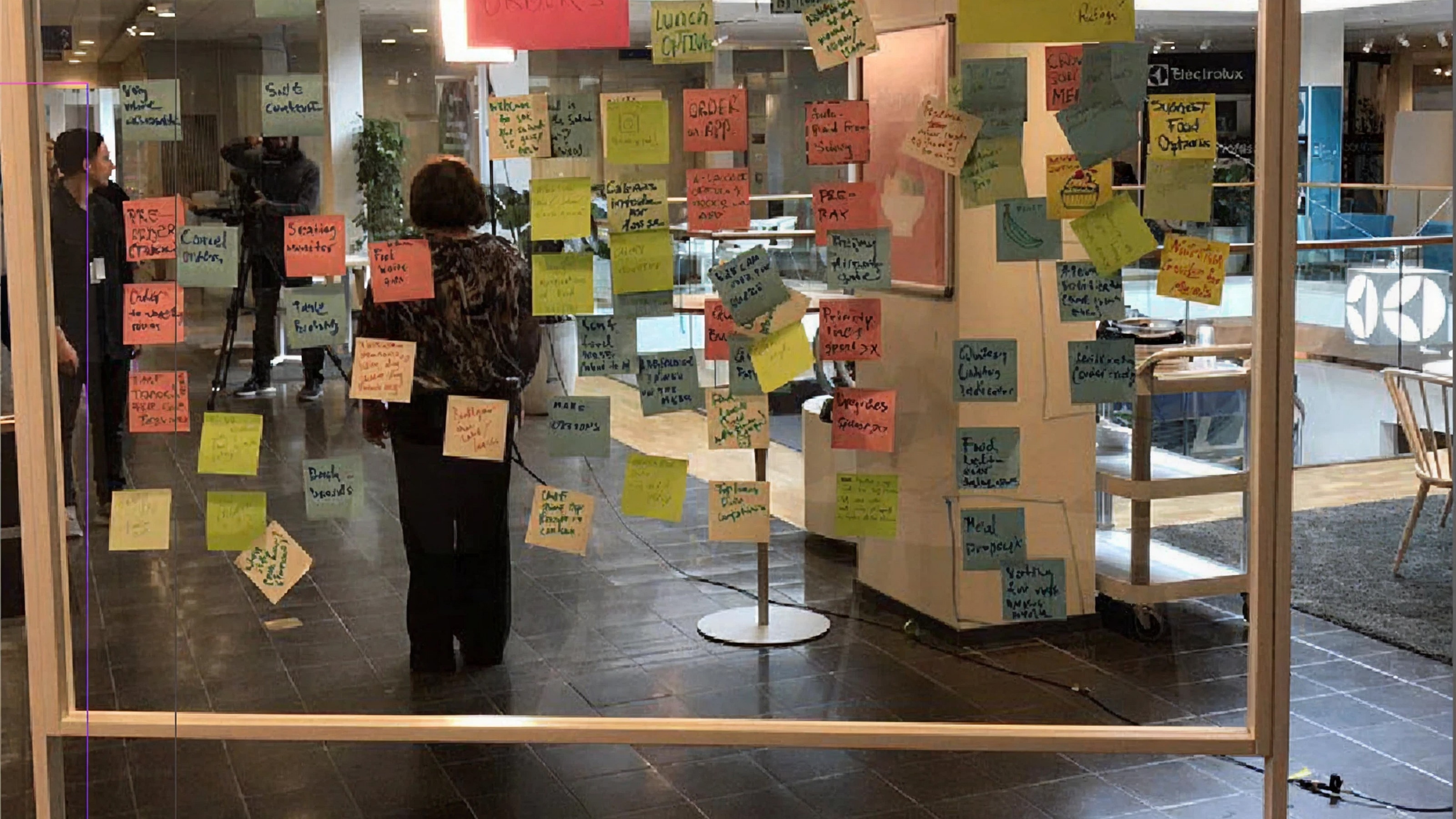
Build. Measure. Learn.
Running every step in parallel
Designers sketched at the booth, developers built against the latest screens, and both sides walked tests directly to users on the same day. Each evening we killed what didn't work and re-pointed the next morning. No handoffs. No waiting.
The pivot on day two
Our first concept treated the app as an ordering tool: menu, cart, checkout. Testing with three employees over a single lunch made the problem obvious — nobody wanted an extra step if it didn't guarantee a faster pickup. We rebuilt the flow around time, not items: a booked pickup slot with a meal attached to it. Same ingredients, fundamentally different frame.
What I shipped
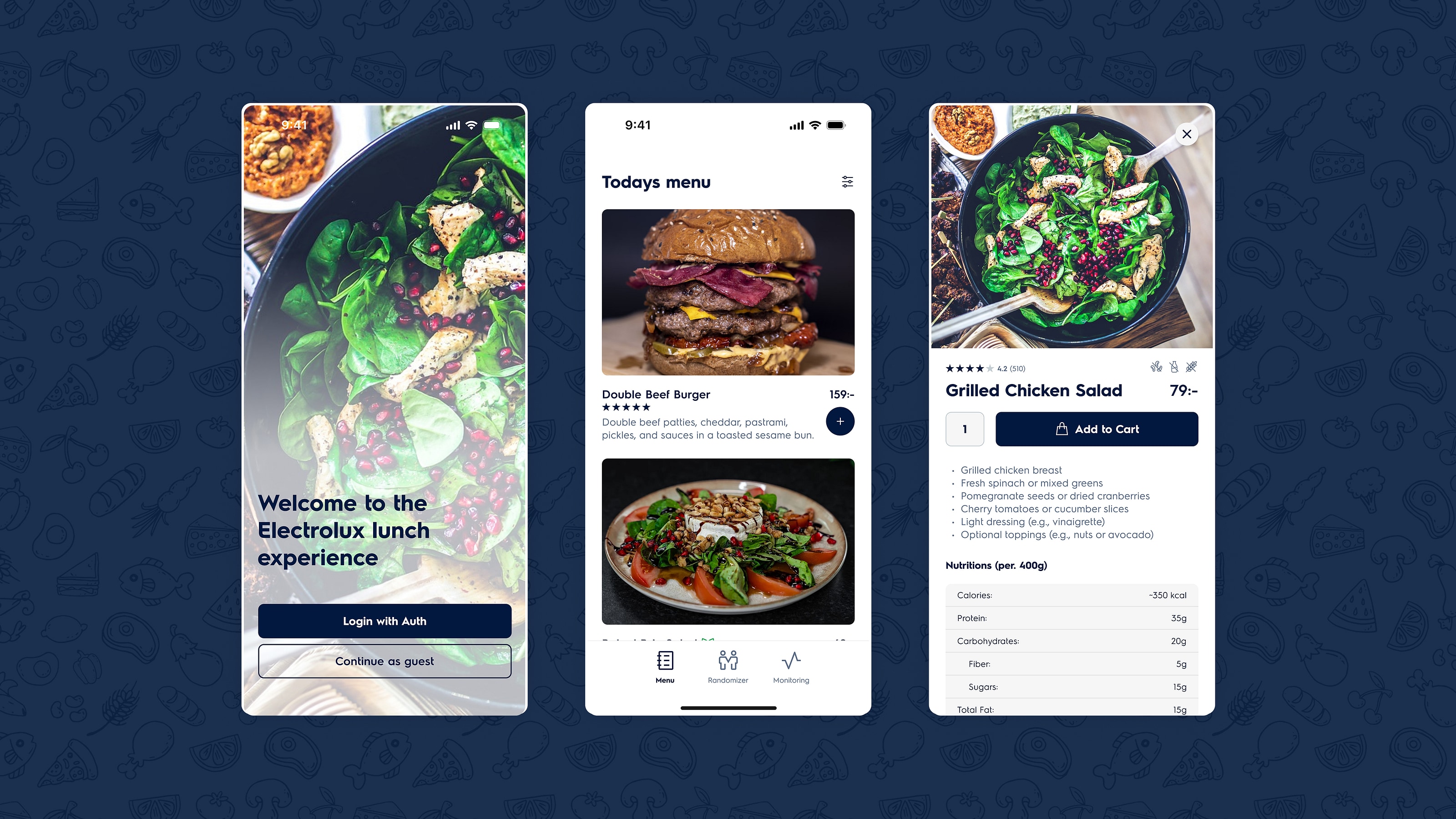
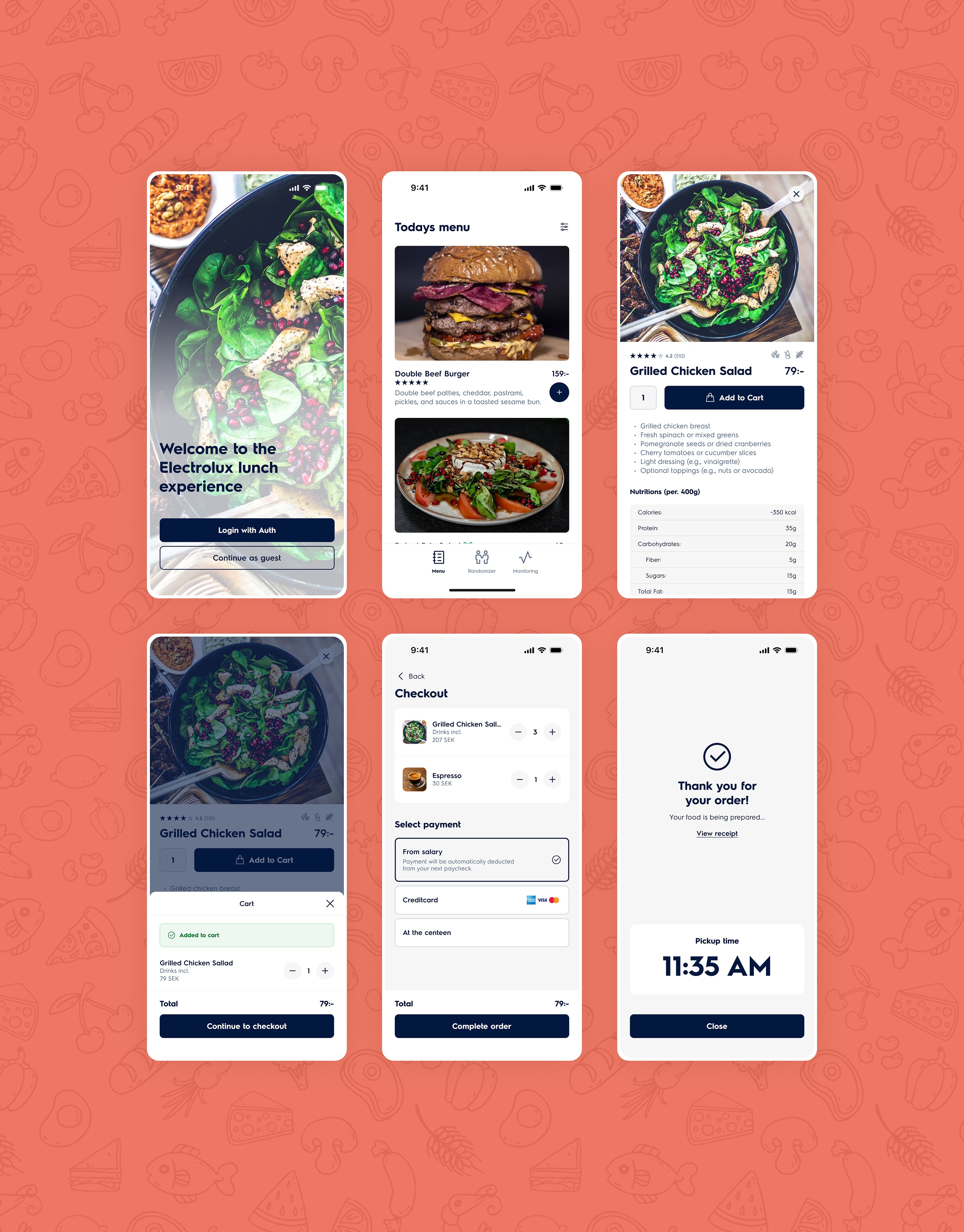
The shipped app is a scheduling tool first and an ordering tool second. Users pick a pickup window, attach a meal, and walk past the queue. The kitchen sees live demand against their prep plan and can shift between dishes before 11:00.
Pre-booked pickup slots
The core mechanic that moved people past the queue.
Menu on the slot
The ordering step became a two-tap confirmation.
Ready-for-pickup notifications
Dropped the last 90 seconds of standing around.
Salary-linked checkout
Removed payment friction by routing through the existing HR system.
Waste-tracking dashboard
Nudge layer for the kitchen, gamified across shifts.
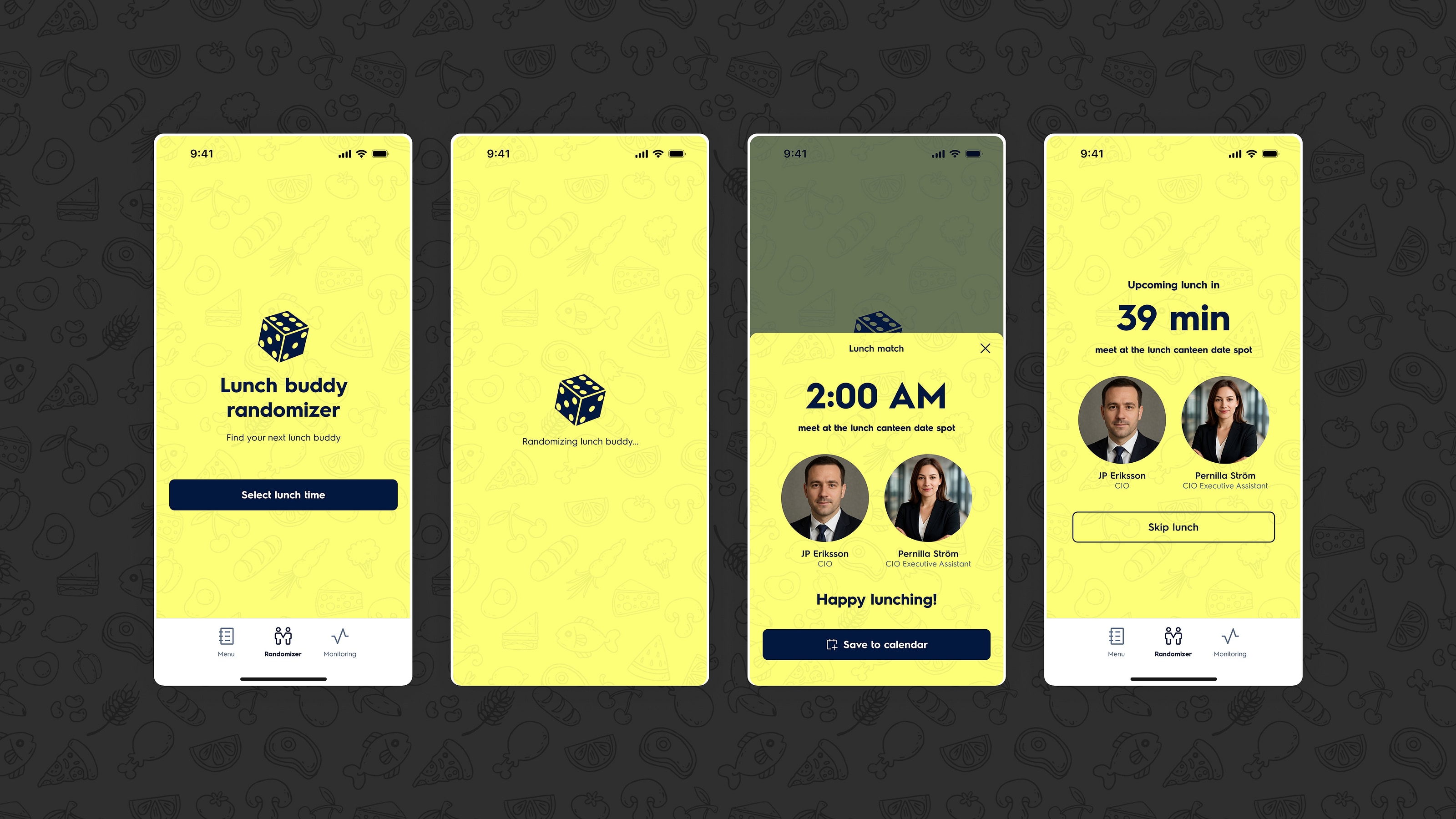
Lunch Buddy randomiser
Connected employees across teams and made the app sticky beyond its utility.
Outcomes
Executive buy-in
A clear mandate to scale the agile, user-centric model into other IT initiatives across Electrolux.
Replicable method
Documented and adopted as the internal reference template for IT projects.
Owned end-to-end
A living product the organisation runs and maintains itself — built and validated in five days.
Next case
230% conversion lift on BenifyDeals in three weeks